
The hunt for the missing voices - Can technology crack the code for gender in Danish business and media?
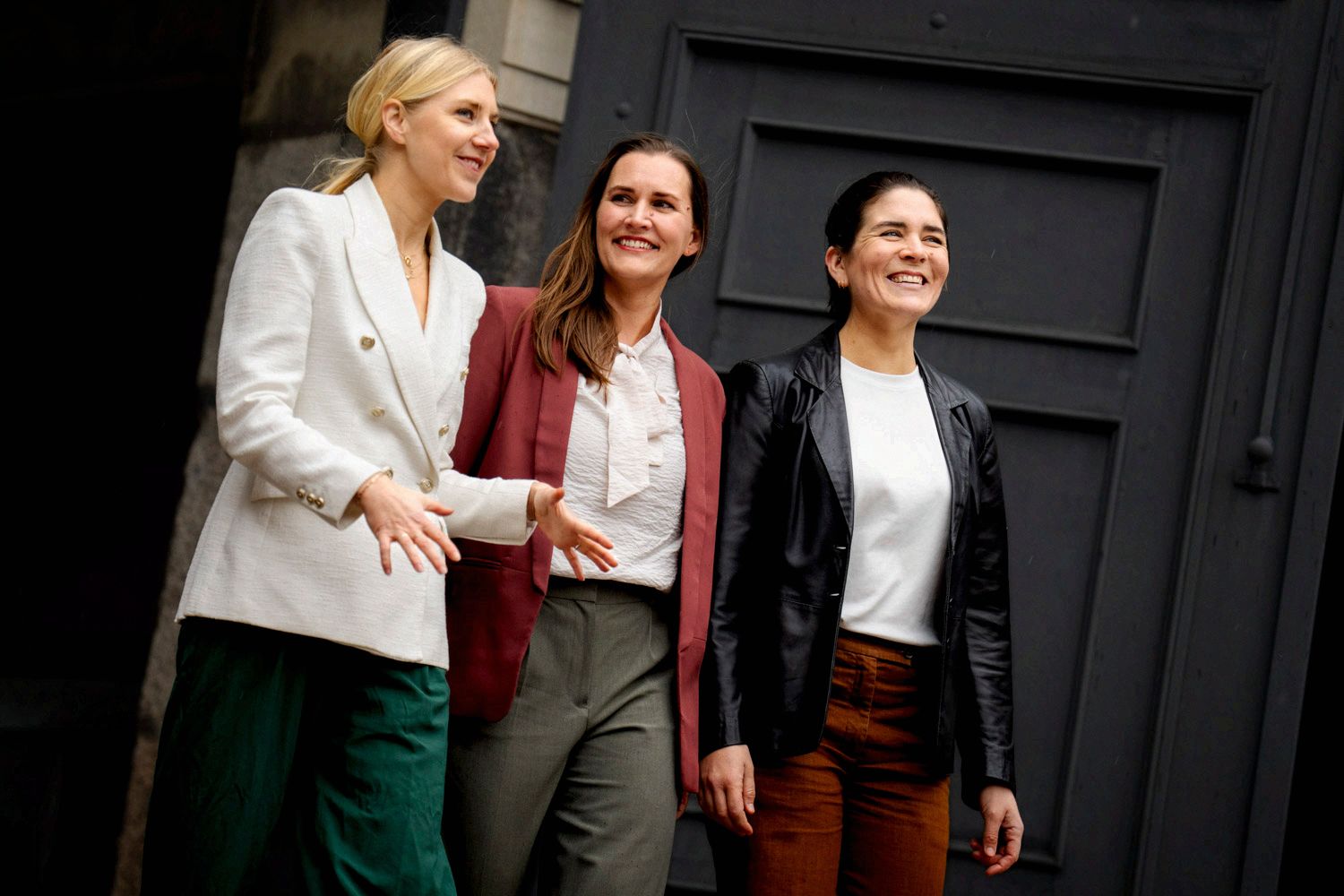 by Christina Haurum, Mette Aaskov Lassen and Cecilie Bindslev, co-owners of DiverseEksperter
In 2021, many believed gender balance in Danish business and media would solve itself. Five years later, the numbers show stagnation, familiar voices still dominate, and structural barriers remain. The question is no longer if change is needed, but how to make it happen.
From left to right: Christina Haurum, Cecilia Bindslev and Mette Aaskov Lassen, co-owners of DiverseEksperter. Photo: Scanpix
In 2021, the debate about the underrepresented gender in Denmark was characterized by optimism, and many expected the problem to resolve itself as part of “natural development.” The rationale was based on a clear assumption that the many well-educated women who had graduated from universities over the years would gradually and without intervention find their way to the top positions in society. But if we look at the actual figures here in 2026, they tell a different and more nuanced story of stagnation and structural barriers.
Developments 2021-2026: Moderate progress
According to figures from Statistics Denmark and the Danish Business Authority, the proportion of women on the boards of Danish companies has decreased over the past five years. In 2021, women accounted for 21.1% of board positions [1]. Looking at the latest figures from 2025, the underrepresented gender holds just 19.0% of the board positions elected by the general meeting [2].
The trend is even slower in executive management. Here, women still make up less than a fifth of the members [3]. The figures underscore that representation does not happen by itself, but requires active effort.
Why does it stop at the glass ceiling?
When journalists have to explain their choice of sources, they often point to the relentless time factor. Deadlines are pressing, and the phone book is typically filled with names that are already well-known, media-savvy, entertaining, and quick to respond. The result is a self-reinforcing effect: the same voices are heard again and again, while new female experts remain invisible in the public debate.
In the business world, the mechanisms are similar. Recruitment to boards and top management often takes place through networks that have historically been male-dominated. Even when talented women are found in the organization, their careers often stop at the middle management level. Research indicates that factors such as maternity leave, expectations of constant availability, and a lack of visible role models play a significant role [4].
Data points to three main barriers that perpetuate the imbalance:
- Recruitment bias: Positions and expert roles are often filled through closed networks. When the network is homogeneous, the candidate pool remains the same.
- The exposure gap: Men are more often asked to speak as experts. This builds their public profile and makes them more attractive for recruitment.
- The time barrier: In a busy media environment or a fast-paced hiring process, speed is prioritized over thoroughness. The “safe” choice is preferred over seeking out new profiles.
The status in 2026 is that Denmark is in danger of being overtaken by our Nordic neighbors, who have been quicker to implement systematic solutions to these barriers [5]. For example, Norway has for years enforced strict legal requirements for 40% gender balance on boards of directors, with noticeable consequences for non-compliance, while Iceland has introduced groundbreaking legislation on equal pay certification, which forces companies to proactively document that they are closing the gender pay gap.
The way forward through visibility
If Denmark is to realize its full potential, it must dispel the myth that diversity is a “soft” issue. The truth is that it is a hard economic and democratic necessity. Without broader representation in the media, we risk losing trust in our shared institutions, and without diversity in business, we lose competitiveness in the global market.
The biggest change in 2026 will be the shift from manual searching to technology-driven solutions. So far, recruitment and source selection is driven by personal networks, which is a manual and time-consuming process that often unconsciously favors those who resemble the decision-maker. In a busy workday, time is the biggest enemy of diversity; when deadlines are pressing, the familiar choice often wins over the thorough choice. Here, technology acts as a democratizing shortcut that removes the “friction” and makes it possible to find the right profile in seconds rather than hours. This is where we find the key to removing both the time barrier and unconscious biases: by making the diverse choice the most effective choice.
Evidence and professional assessments
There is broad professional consensus that the lack of women at the top is not due to a lack of skills. On the contrary, education statistics show that women today make up the majority of graduates from Danish universities [6].
In organizational research, several meta-studies show that companies with greater gender diversity in management have, on average, better decision-making processes and a lower risk of one-sided thinking [7]. Media research points to similar benefits: Editorial teams that work systematically with diversity produce broader and more nuanced journalism, which is crucial for maintaining relevance among a wide audience [8].
Why it matters now
Three developments have heightened the relevance this year:
- The EU’s new directive on gender balance on boards of directors sets minimum representation requirements.
- Talent shortages have become a strategic problem; companies simply cannot afford to overlook half of the talent pool.
- Public expectations have changed, and lack of representation is no longer seen as a random result but as an active choice and thus a problem that can be addressed.
The solution: DiverseEksperter as a catalyst
A recurring problem is friction: it takes time to find new female experts and build relationships with them. This is where technology comes in. The DiverseEksperter platform addresses the challenge of underrepresented women directly with a mission to deliver a technology-based solution that both highlights women and equips them to put their skills to use.
- For the media: The platform provides access to a curated database of female experts across a range of disciplines. A single search replaces numerous phone calls and removes the time barrier that often stands in the way of a more diverse selection of expert sources.
- For companies: DiverseEksperter serves as a tool for both branding and commitment. By being present, the company signals an active commitment to diversity, while gaining direct access to women who can contribute as speakers, panelists, or role models at internal events.
Next steps
The coming years will show whether Denmark is able to move from gradual improvements to real change. Legislation can provide a push, but the most sustainable solutions are those that combine data, technology, and practice. The potential lies in the tools that make it easy to act differently while creating real value by systematically expanding the circle of voices we all listen to.
References:
PwC Danmark: “Inklusion og diversitet i bestyrelsen – fra ambition til handling”. Retrieved from pwc.dk.
Dansk Industri (DI): “Kønsdiversitet i bestyrelseslokalet 2025 – en undersøgelse af kønssammensætningen i danske virksomheders bestyrelser”.
Danmarks Statistik: “Ledelse og kønsfordeling (LEDERE1)“. Data extracted from statistikbanken.dk.
VIVE – Det Nationale Forsknings- og Analysecenter for Velfærd: “Kønsforskelle i karriereforløb”, 2021.
World Economic Forum: “Global Gender Gap Report 2025”.
Uddannelses- og Forskningsministeriet: Statistik over kandidatuddannelser og kønsfordeling.
European Management Journal (via ScienceDirect): Metastudier om diversitet i ledelse og beslutningsprocesser. Retrieved from sciencedirect.com/journal/european-management-journal.
Reuters Institute for the Study of Journalism: “Digital News Report 2023”. Retrieved from digitalnewsreport.org/survey/2023/.