
Why Diversity Is Not About Gender, But About Value Creation
 by Charlotte Lynge Rice, Founder & Content Producer, Kreation Media
Joo Runge shares why diversity is not a symbolic exercise, but a strategic lever for better decisions, stronger companies, and long-term value.
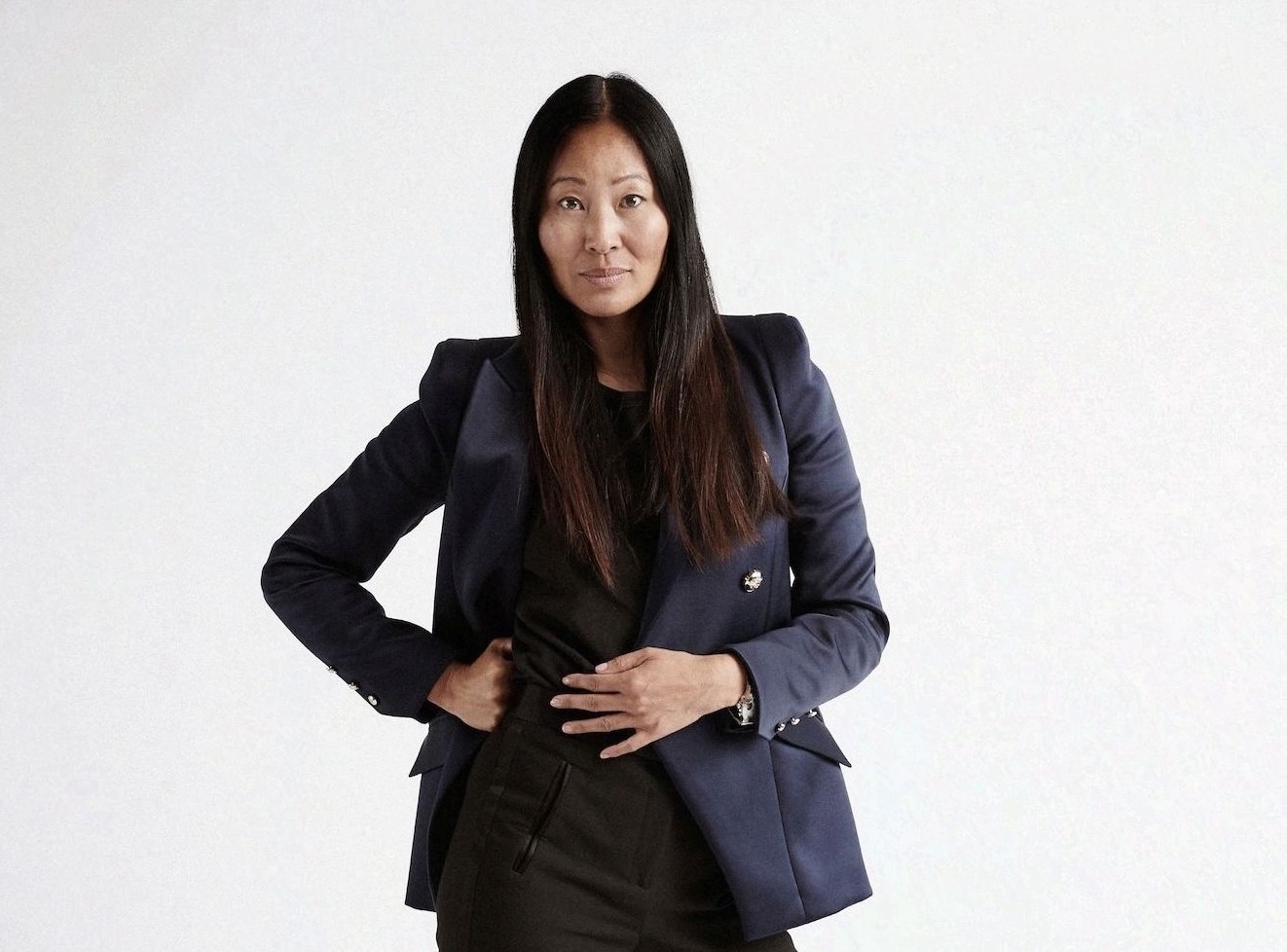
Chairwoman of Women in Tech, Joo Runge. Photo: Sebastian Stigsby
For Joo Runge, diversity is not only a question of representation. It is a question of value creation.
Trained as a lawyer and later working with mergers, acquisitions, and financing, Joo spent the early part of her career in male-dominated environments. Over time, she realised that her strength lay closer to the commercial and strategic core of businesses.
“I could feel that I had more in me than being confined to the legal role alone,” she says.
Today, Joo works primarily with tech companies on financing, board work, and C-level sparring. She advises founders and executives on raising capital, holds five board positions, and is fit and proper approved by the Danish Financial Supervisory Authority (Finanstilsynet).
“Funding is often where companies struggle the most,” she explains. “That’s where my background in law, finance, and commercial strategy comes together.”
With more than 20 years of experience working with startups and growth companies, Joo has seen the same patterns repeat themselves.
“Founders are often deep in operations,” she says. “Sometimes they need someone who can step back, look at the data, and challenge the direction.”
This is where Joo’s focus on diversity begins: with the understanding that something is lost when everyone in the room thinks alike.
When Experience Shapes Perspective
Joo’s engagement with diversity did not begin as a strategic agenda, but with experience.
Working early in her career with M\&A, she became acutely aware of the dynamics in highly homogeneous environments.
“I wasn’t one of the boys,” she says. “And that made me reflect on why certain rooms feel closed, and what we lose because of it.”
That reflection stayed with her and deepened through her involvement with Women in Tech, where she has been active for nearly eight years. Today, she is CEO of Black Panther Consulting and co-founder of InTech Founders, an accelerator created to address one of tech’s most persistent inequalities: access to funding.
The Funding Gap, and Why It Matters
Despite years of debate, the numbers remain stark. According to data from PitchBook, startups founded solely by women accounted for around 2% or less of total venture capital funding in both Europe and the United States in 2023, highlighting a persistent gap in VC allocation.
“These statistics are still deeply skewed,” Joo says. “And they don’t reflect a lack of talent.”
In fact, a Boston Consulting Group study shows that startups founded by women generate 78% more revenue per dollar invested than those founded by men.
“Diversity creates better solutions,” Joo emphasises. “More perspectives lead to better products.”
Bias, Boards, and Better Decisions
Last year, Joo co-authored a report on board work together with, among others, the Confederation of Danish Industry (Dansk Industri), highlighting how unconscious bias shapes recruitment.
“We tend to choose people who resemble ourselves,” she explains. “It feels easier, but it limits innovation.”
For Joo, the challenge is not intent, but awareness.
“These dynamics are often unconscious. And they will only change if we talk about them openly.”
Crucially, she rejects the idea that diversity is about exclusion.
“This is not about ‘us versus them’,” she says. “It’s about value creation.”
And while diversity can introduce friction, she sees that as a strength.
“Yes, it can be harder,” she says. “But that’s where better solutions are created.”
Making Diversity Measurable
For Joo, diversity will not move forward through good intentions alone.
“We talk a lot about diversity,” she says. “But without concrete goals, nothing really changes.”
Research consistently shows that organisations with clear diversity targets and leadership accountability make significantly more progress than those relying on voluntary initiatives. For Joo, the conclusion is simple: diversity must be treated like any other strategic priority.
“If you want to launch a new product, you set goals and measure progress,” she explains. “Diversity should be no different.”
And responsibility cannot be delegated. “This has to come from the top. You cannot place it on someone ‘on the floor’ and expect real change,” she says.
Looking Ahead
Looking five to ten years ahead, Joo hopes diversity will no longer be framed as a gender debate.
“I hope we talk less about ‘us versus them’, and more about value creation,” she says.
“Better solutions come from different perspectives,” Joo concludes. “That should be the norm.”
Sources & Data References
World Economic Forum (based on PitchBook data): Women founders and venture capital – some 2023 snapshots: https://www.weforum.org/stories/2024/03/women-startups-vc-funding
Boston Consulting Group (2018): Why Women-Owned Startups Are a Better Bet: https://web-assets.bcg.com/img-src/BCG-Why-Women-Owned-Startups-Are-a-Better-Bet-May-2018-NL_tcm9-193585.pdf?utm_source
McKinsey & Company (2020): Diversity Wins: How Inclusion Matters: https://www.mckinsey.com/featured-insights/diversity-and-inclusion/diversity-wins-how-inclusion-matters?utm_source
McKinsey (2023): Board and executive diversity improves performance: https://www.mckinsey.com/featured-insights/diversity-and-inclusion/diversity-matters-even-more-the-case-for-holistic-impact?utm_source
Cai, W., Chen, Y., Rajgopal, S. et al. Diversity targets. Rev Account Stud 29, 2157–2208 (2024). https://doi.org/10.1007/s11142-024-09831-x
Oxford Review: Does Diversity and Inclusion Improve Organisational Performance?: https://oxford-review.com/does-diversity-and-inclusion-improve-organisational-performance/