
You Can’t Reimagine Careers Without Reimagining Childhood
 by Nermeen Ghoniem, Founder of Hello Ada
We are asking adults to reimagine their careers using AI, while ignoring how early bias decides who feels entitled to imagine in the first place. If we want real change, the reimagining has to start much earlier.
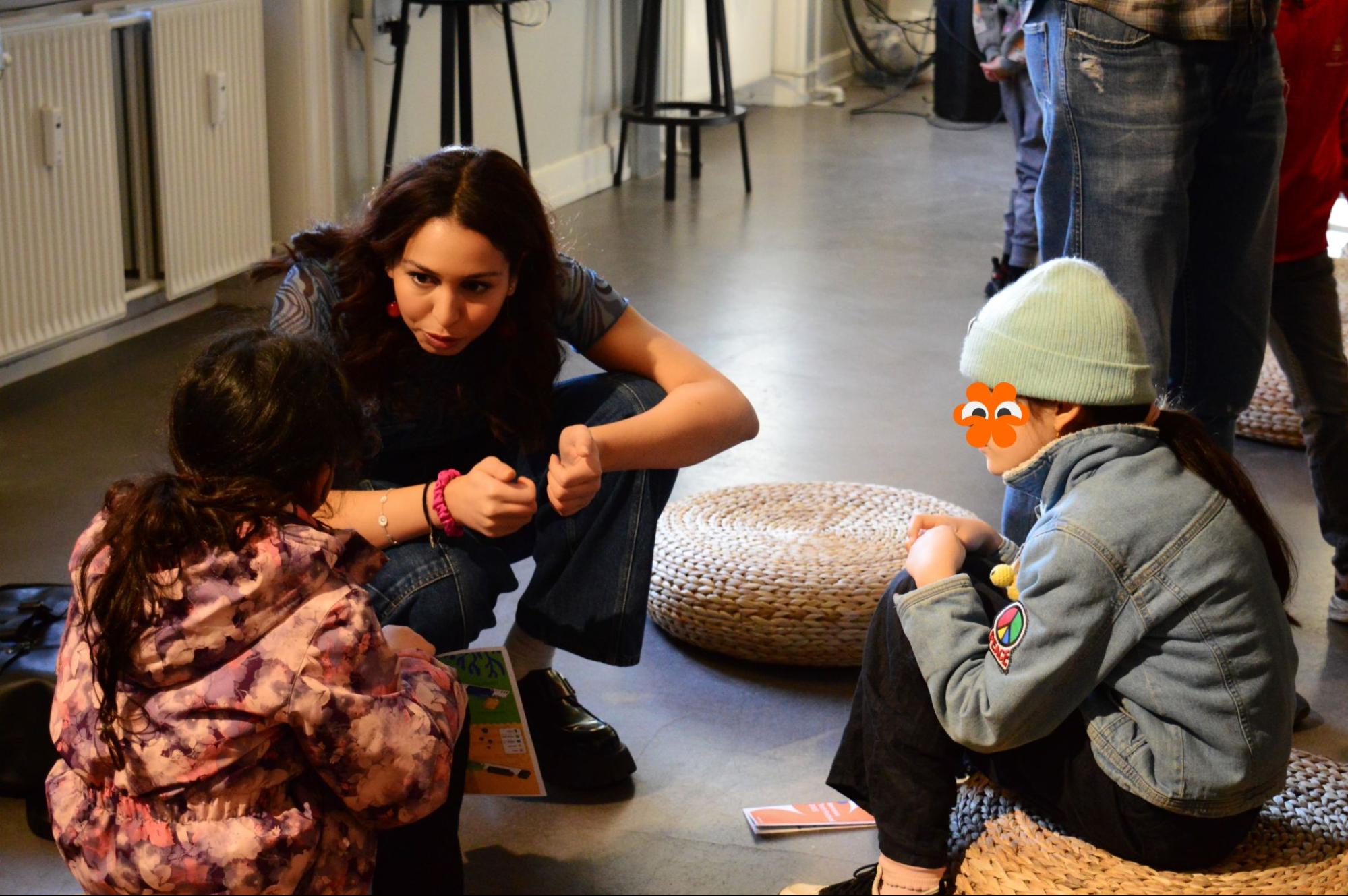
Nermeen Ghoniem with participants at Hello Ada’s Kids Tech Festival 2025, supported by Google.
Every year on International Women’s Day, we talk about representation, leadership, and closing the gender gap in tech. And every year, we focus on adults, their careers, their confidence, their choices.
But here is the uncomfortable truth.
By the time most women are asked to reimagine their careers, the biggest decisions have already been made for them.
Not by them, but by culture. The result is visible across the industry today. Women make up only around 22 percent of AI professionals globally, with even lower representation in senior roles (World Economic Forum, 2023).
Still, bias in AI does not begin in the workplace. It begins in childhood. In classrooms, living rooms, and learning environments where some children are encouraged to experiment, take risks, and build, while others are rewarded for being careful, correct, and quiet.
Globally, only 35 percent of students in STEM fields are women, with participation dropping even further in engineering and computer science (UNESCO, 2022). Yet, research shows that gender gaps in confidence and sense of belonging in technical subjects appear as early as primary school, even when performance is comparable (OECD, 2019).
AI does not invent inequality. It automates it.
When we use AI to visualise alternative futures for adults, we are addressing the symptoms. That matters. But if we want to change the system, we also have to address the root. Who grows up believing they are allowed to shape technology at all.
At Hello Ada, we see this clearly. When children are invited to build with AI, not just use it, the power dynamic shifts. Technology stops being something distant and intimidating. It becomes material. Something you can question, remix, and push back against.
This is especially true for girls.
Girls do not lack ambition, logic, or curiosity. What they lack are environments that invite them into technology without gatekeeping. Environments that value imagination as much as optimisation, and questions as much as answers.
We often talk about diversity in AI as a hiring problem. It is not. It is an imagination problem.
Homogeneous systems are built by homogeneous experiences. If the same types of people are encouraged to experiment with technology from a young age, we should not be surprised when innovation and opportunity follow the same narrow paths.
Reimagining the future of work with AI is powerful. But if we stop there, we miss the bigger opportunity. The real leverage point is earlier. Teaching children that AI is not neutral, not magical, and not finished, but shaped by human choices.
If we want more women shaping the future of technology, we need to stop asking girls to fit into systems they did not help design. We need to raise a generation that grows up knowing they have the right, and the responsibility, to build better ones.
The future of AI will not be decided only by today’s workforce. It will be decided by who grows up believing they belong in it.
That is the reimagining that truly matters.